Signals & constellations
Generate the required civil GNSS signals and frequencies within one repeatable scenario and receiver test definition.

GPS, Galileo, GLONASS, BeiDou, QZSS, NavIC and SBAS simulation
Software-defined GNSS RF signal generation for multi-constellation receiver development, repeatable laboratory testing, dynamic simulation and specialized multi-output experiments.
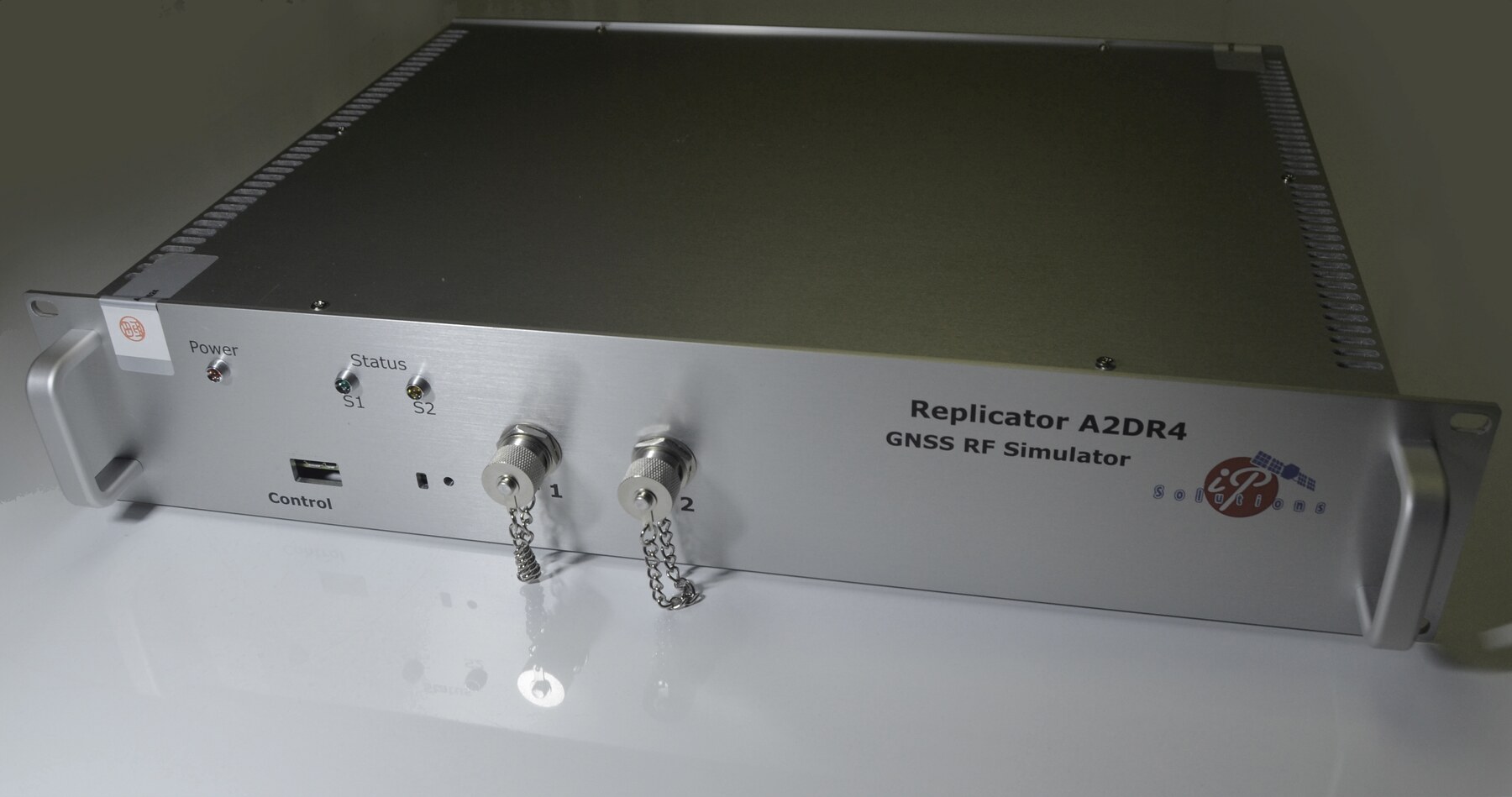
Replicator ReGen-based GNSS RF simulator
ReGen software
ReGen defines the signal environment, vehicle motion and receiver test conditions independently of the final hardware configuration.
ReGen-DIF can generate files for ARAMIS or a user SDR without RF hardware. With a Replicator chassis, the same scenario engine provides real-time RF for ARAMIS or an off-the-shelf conventional receiver, including dynamic signal and power control.
Test capabilities
Generate the required civil GNSS signals and frequencies within one repeatable scenario and receiver test definition.
Exercise static, vehicle, airborne, space and customer-supplied trajectories with external timing and trigger integration.
Introduce controlled atmospheric effects, multipath, antenna behaviour and measurement errors for comparative testing.
Build controlled interference and spoofing experiments for receiver evaluation and multi-antenna processing research.
System family
These names identify the principal system roles. RF cards, output count, signal set, dynamics and software options are defined in the final configuration.
General-purpose GNSS RF simulator
The principal ReGen hardware platform for receiver development, verification, production and acceptance testing. RF architecture, outputs and interfaces are configured for the required test program.
Multi-output and multi-antenna testing
A ReGen configuration for controlled interference, spoofing, antenna-array and CRPA experiments requiring several coordinated RF outputs and defined spatial signal conditions.
Integrated compact system family
The Simceiver family integrates ReGen simulation, recording and controlled RF playback. Simceiver Two-RF supports dual-frequency or two independent vehicle scenarios; Simceiver USB-2 provides a mature single-frequency volume configuration.
Digitized-IF generation
A digital-output configuration for receiver and signal-processing development where the required interface is digitized IF rather than an RF connection.
Controlled record & playback
Simceiver Two-RF records up to two RF inputs; Simceiver USB-2 records one single-frequency input. Both models reproduce saved data through their integrated playback path, while recording and transmission remain separate operating modes.
No real-time recording-to-transmission capability.
View the Simceiver platform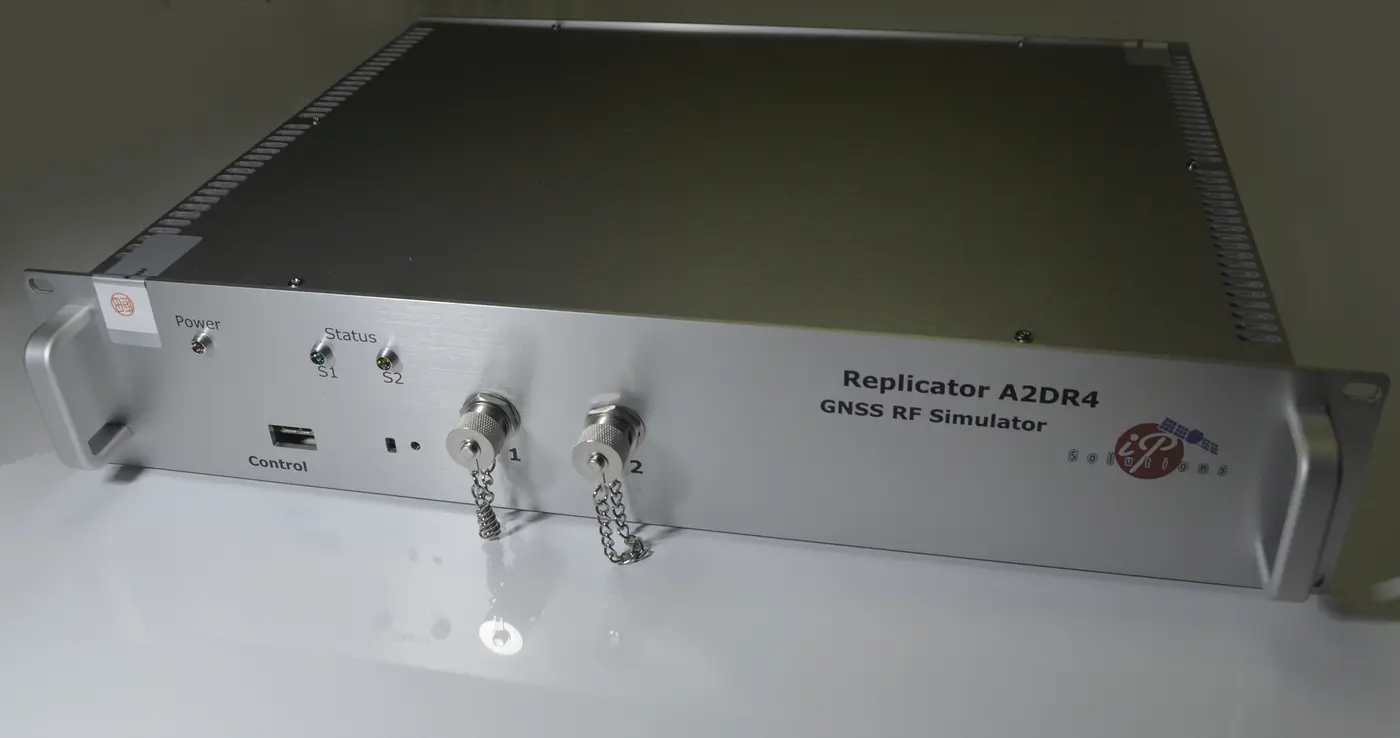
Integration
ReGen systems can be configured for software-only digitized-IF, compact two-RF work with Simceiver, full rack-mount RF generation with Replicator, or controlled playback of saved signal files. External frequency reference, 1PPS, trigger, trajectory, inertial, automation and HILS interfaces are defined against the intended experiment.
Technical demonstrations
Independent scientific use
ReGen was used by Prof. Pavel Kovář and colleagues in work for an ESA project to simulate GNSS signals for a LEO spaceborne receiver. Prof. Kovář also reported using ReGen for testing LEO satellite GPS receivers.
Configuration enquiry
Tell us the receiver, constellations and frequencies, dynamics, interfaces, number of RF outputs and intended acceptance method. We will separate the standard configuration from customization and NRE.
Discuss a ReGen system