GNSS RF simulation, recording and playback

Simceiver™ GNSS RF Simulation, Recording and Playback Systems

Compact GNSS RF simulator systems combining selected-band recording, SDR software-receiver processing, 8-bit signal generation and controlled RF playback. The current USB 3 Simceiver A3-R2-U3 is available for individual configurations; the established single-frequency USB 2 A1-R1-U2 remains available for volume projects.

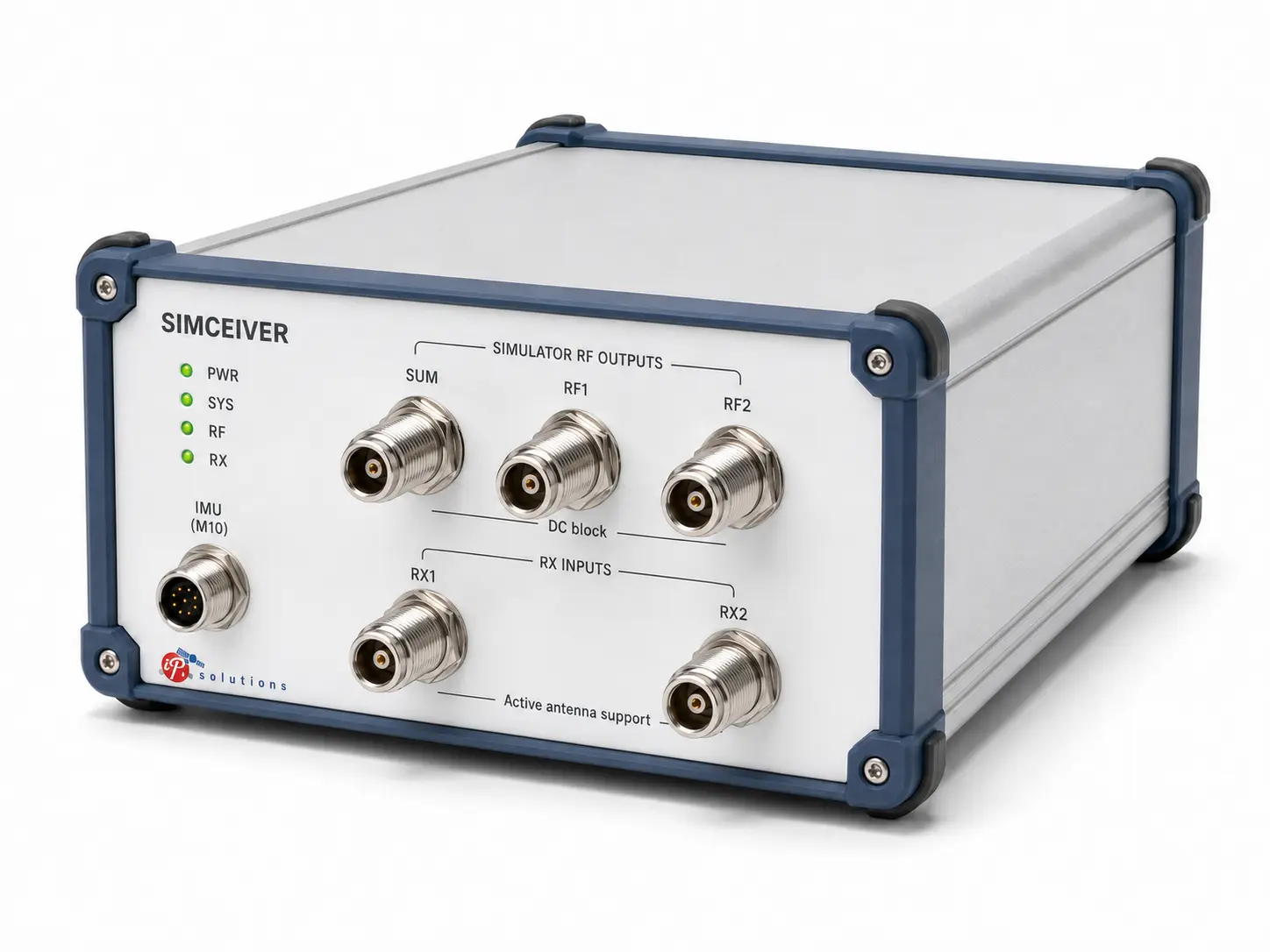
IP-Solutions Simceiver A3-R2-U3 compact GNSS simulator, recorder and playback system

Simceiver A3-R2-U3Provisional enclosure shown; final panel details may vary.

Select by RF scale and ordering model.

Both configurations integrate simulation, recording and controlled playback. A3-R2-U3 is the current individually configured USB 3 model; A1-R1-U2 remains available for standardized multi-unit deployment.

Mature volume model1 RF path

Simceiver A1-R1-U2

A proven one-board, single-frequency USB 2 Simceiver for universities, teaching laboratories, research groups and OEM applications requiring multiple identical systems.

  • One RF output, single-frequency operation
  • Integrated one-channel recording and playback
  • Defined, standardized USB 2 architecture
  • Compact multi-unit laboratory deployment
  • Available for volume orders; minimum order quantity applies

A four-RF solution is also available for broader multi-output tests. Please contact sales for configuration details.

Simulation and live-signal recording are alternatives—not one mandatory sequence.

A

File-based simulation

Generate an 8-bit simulated signal file with ReGen. Reproduce it later as RF through Streamer and/or process the file directly with the bundled ARAMIS receiver or Borre's free MATLAB receiver.

B

Real-time simulation

Generate and transmit civil GNSS signals directly in real time through the 8-bit simulation path. No recording stage is required.

C

Live-signal recording

With A3-R2-U3, check the live signal with bundled ARAMIS before recording. SPS, NavIC and SBAS are supported. Record the selected band, then process it with ARAMIS or Borre's MATLAB receiver and/or reproduce it through the controlled RF playback path.

Recording and RF playback are separate operating modes. There is no real-time record-to-transmit relay path.

Record the GNSS signal band required for the test—not unused wideband spectrum.

01

Receiver-relevant capture

Simceiver is configured around selected GNSS centre frequencies and receiver-test objectives. The recording preserves the complete signal mixture within the selected band for later software-receiver processing and controlled RF reproduction.

02

Receiver-matched 2-bit recording

Two-bit recording reflects the low-bit quantization commonly used inside high-performance GNSS receivers. For thermal-noise-dominated GNSS signals, additional recording bits can multiply data volume without improving a typical receiver-level test in proportion.

03

Software-receiver access

Bundled ARAMIS processing makes the recording an engineering dataset rather than an opaque RF archive. Users can verify acquisition and tracking before recording, then process simulated or recorded files with ARAMIS or Borre's free MATLAB receiver.

04

Manageable records

Signal-focused sampling and low-bit quantization keep recordings practical to store, transfer, inspect and reuse. The result is suited to iterative laboratory work rather than one-time bulk capture.

Dual-frequency, dual-scenario or standardized single-frequency operation.

The selected bands, sampling, bandwidth and software options are defined against the receiver and test objective. A four-RF solution is also available for broader multi-output tests.

01

Simceiver A3-R2-U3

Dual frequency

Combine two selected GNSS frequency bands at the SUM output for one vehicle scenario and receiver test.

  • Combined dual-frequency SUM output
  • Two-channel recording and playback
  • Multi-frequency receiver development
02

Simceiver A3-R2-U3

Two antennas / vehicles

Use RF1 and RF2 for two independent single-frequency antenna or vehicle scenarios.

  • Two independent trajectories
  • One selected frequency through each of RF1 and RF2
  • Parallel receiver or system tests
03

Simceiver A1-R1-U2

Single frequency

Use one standardized RF path for simulation, one-channel recording and controlled playback.

  • One RF output and one frequency
  • Integrated one-channel recording and playback
  • Multi-unit laboratory and OEM deployment
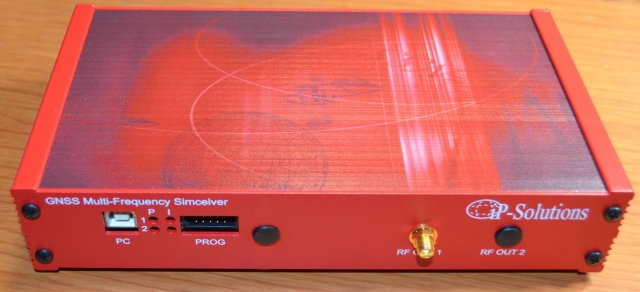
IP-Solutions Simceiver A1-R1-U2 USB 2 enclosure

The original one-board platform remains available.

The A1-R1-U2 model is retained as a standardized single-frequency USB 2 product for projects that require multiple identical compact units. Its role is volume laboratory, education and OEM deployment.

  • Single-frequency, one-RF Simceiver
  • Integrated recording and controlled playback
  • Mature compact hardware and software architecture
  • Volume orders with a minimum order quantity
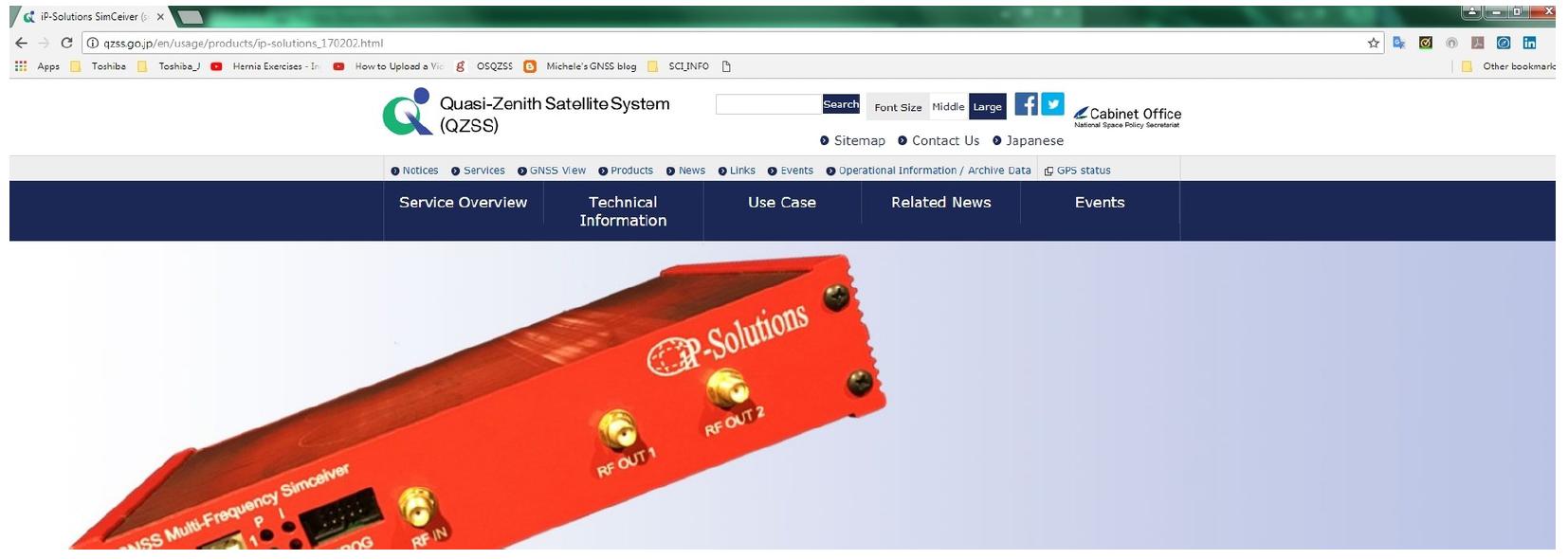
Cabinet Office QZSS page showing the IP-Solutions Simceiver

Simceiver on the official QZSS supporting-product list.

The Cabinet Office, Government of Japan, lists the original Simceiver implementation among products supporting the Quasi-Zenith Satellite System (Michibiki) and documents its GNSS simulation, recording and playback functions.

This official entry documents the Simceiver product lineage; current configurations and specifications are shown above.

https://qzss.go.jp/en/usage/products/ip-solutions_170202.html

Three platforms with distinct RF and commercial roles.

Both Simceiver models integrate simulation, recording and playback. Replicator provides four RF outputs and broader advanced-test capability; recording requires a separate recorder, while playback is available as an option.

CapabilitySimceiver A3-R2-U3Simceiver A1-R1-U2Replicator
Simulator outputsSUM for combined dual-frequency, or RF1 + RF2 for two independent single-frequency scenarios1 RF, single frequency4 RF
Simulation roleDual frequency or two independent antennas / vehiclesSingle frequencyAdvanced multi-frequency and multi-output tests
RecordingIntegrated, two channelsIntegrated, one channelSeparate recorder required
Recording architectureSelected GNSS bands; 2-bit digitized-IF recordingSelected single GNSS band; compact digitized-IF recordingDefined by the separate PORTOS recorder
PlaybackIntegratedIntegratedOptional configuration
ARAMISBundled for live and recorded-signal checksConfigured separatelyConfigured separately
Recorded-data useReceiver-level verification, software processing and controlled RF reproductionCompact recording and controlled RF reproductionAdvanced simulation; recorded-data workflow depends on recorder configuration
OrderingIndividual configured systemsVolume orders; minimum order quantity appliesIndividual configured systems
Primary roleCompact high-end integrated laboratoryMulti-unit laboratory, education and OEM deploymentFull rack-mount advanced-test platform

Integrated does not mean a live relay path.

Both Simceiver models contain recording and playback functions, but recording and RF transmission operate as separate modes. Saved signal data is checked and then selected for later controlled RF reproduction.

RF inputLive check and recording Saved signal data RF outputLater controlled playback

No real-time recording-to-transmission path.

Choose the RF architecture before the option list.

For A3-R2-U3, tell us whether the requirement is dual-frequency or two-antenna / two-vehicle operation, together with the signals, dynamics, recording format and interfaces. For A1-R1-U2, tell us the single-frequency configuration, quantity and intended laboratory or OEM use.